




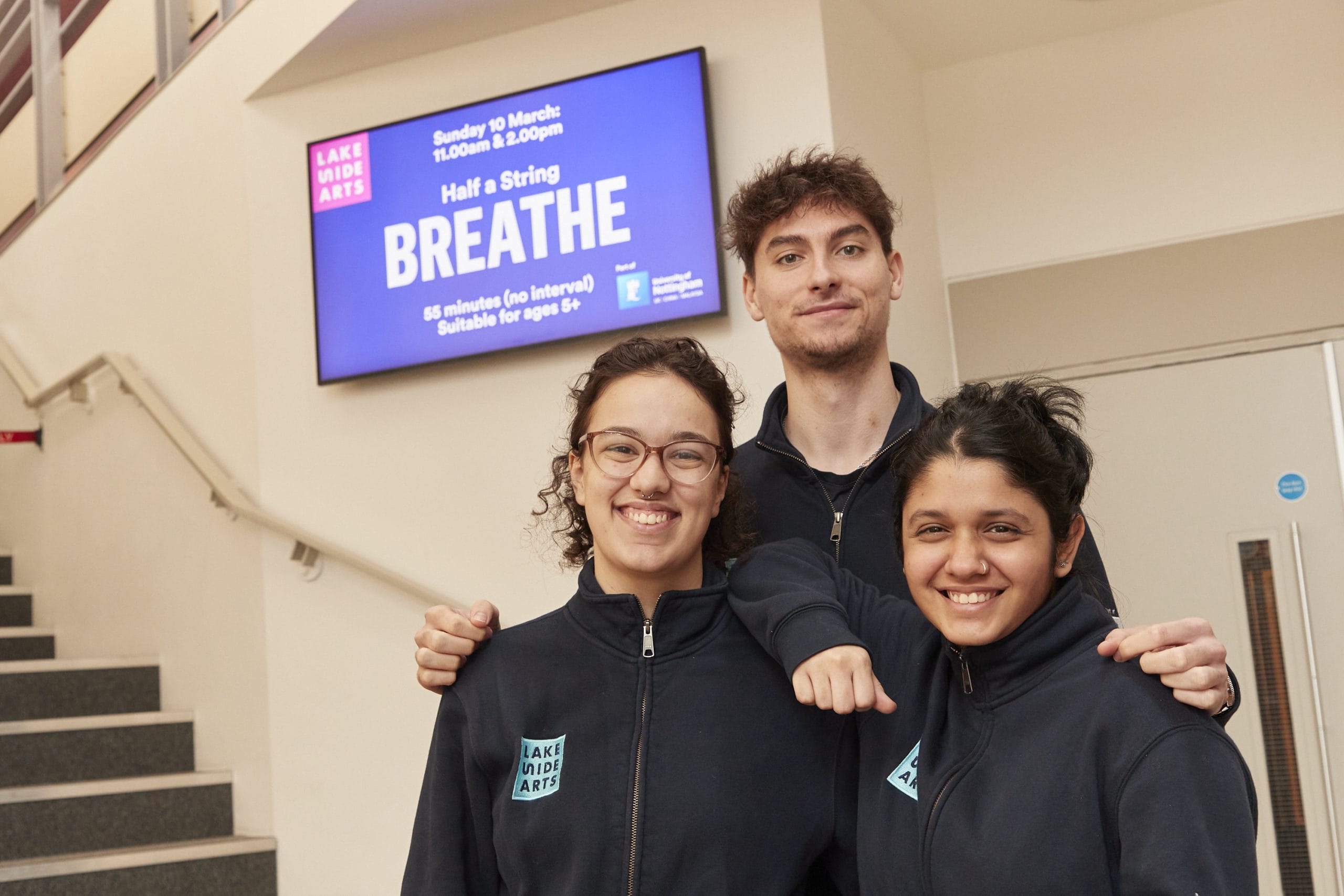



As part of our Young Critics Collective programme, Arwyn Clayton, Julian Fisher and Leah Hudson reviewed Tiny Planet.
Tiny Planet was preformed by Half a String, who uses puppetry, design and original music to craft fantastical human stories that are grounded in live performance; creating accessible, intelligent and astonishing work that champions meaningful collective experiences.
Young Critics are an imaginative collective of students that value collaboration and innovation. Together, they review and help shape future theatre programming.
Reviews
Devised by Half a String in collaboration with Lakeside Arts, Tiny Planet is a visually mesmerising show. The stage is set with a continually rotating tiny planet, at first barren and deserted but nonetheless impressive as a piece of stagecraft for it. For me the creativity of the show in its use of puppetry and props was definitely its strongest feature. The fluidity with which the protagonist Alma traversed the Tiny Planet and the abyssal space around it was stunning, particularly as she was usually puppetted by two of the three cast members simultaneously, demonstrating a degree of polished coordination that must have taken immense effort to perfect.
Additionally the use of simpler, two-dimensional props and puppets to indicate the wider goings on of the universe was made equally effective by the commitment of acting that transformed a piece of painted cardboard into a planet with its own personality and voice. Judging by their laughter, the children in the crowd were particular fans of these characters. Even the Tiny Planet itself, though voiceless, was full of personality and visibly grew and developed throughout the play. First by literally being adorned with plants magnetically attached to its surface; and then by the introduction of various creatures that inhabited it – the apparent favourite being the ‘dinosaur’ (as many enchanted children deemed it) that crawled out of the planet at the end to save the day.
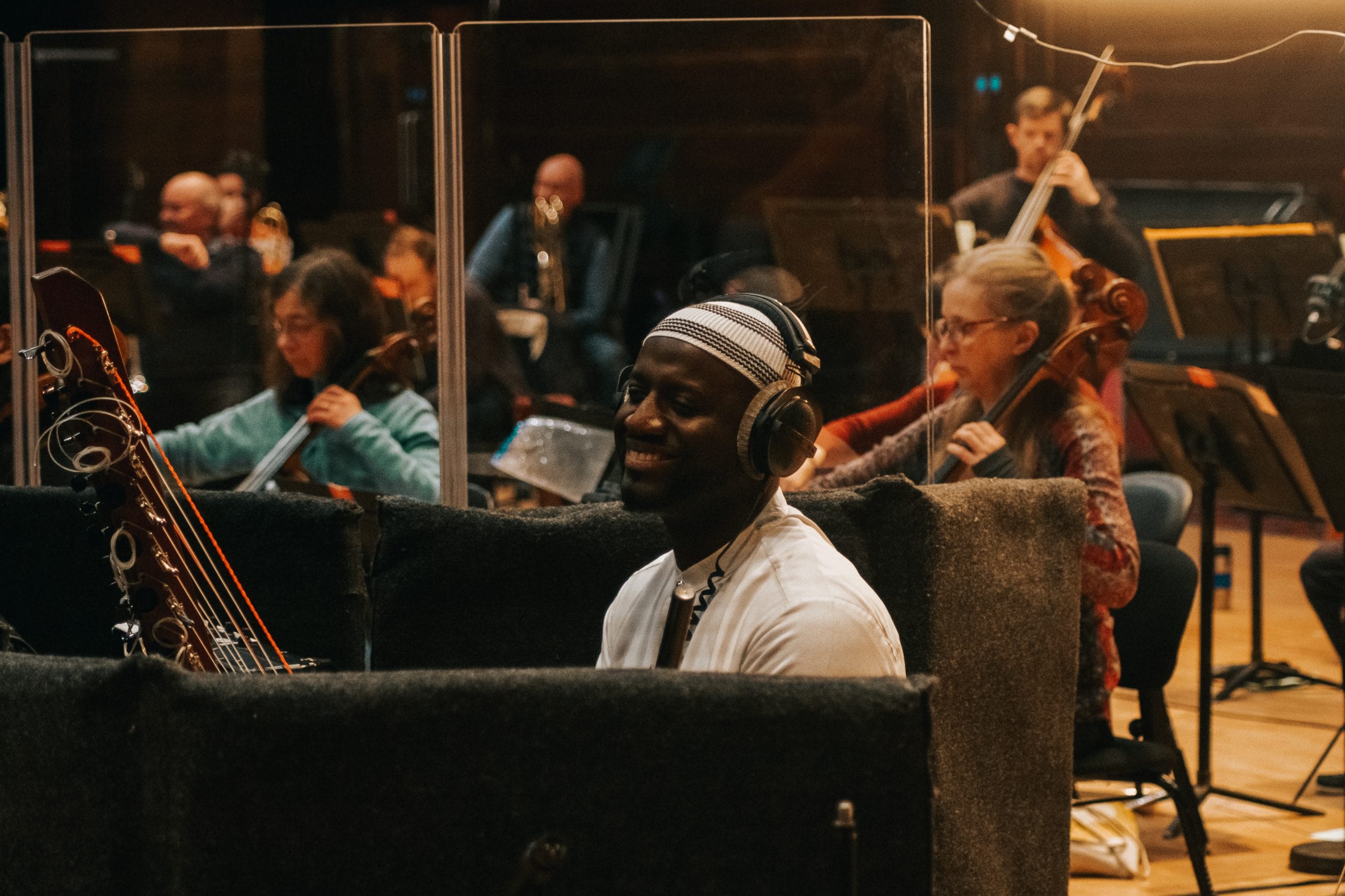
Tiny Planet was also notable for its use of live original music. Performed by Darcey O’Rourke, the acoustic songs that accompanied the story were one of the highlights of the production, both providing context and detail to the show and entertaining the audience of all ages as beautiful songs in themselves. Along with the music, the performers made use of a microphone at the edge of the stage to create immersive soundscapes throughout that enlivened the atmosphere of the production and integrated the audience into it, as we were able to hear each individual sound build up into a final ambient score. However, during the sequence of Alma’s crashlanding on the Tiny Planet early in the show, a fractious and jarring cacophony of music and sound was played. As it represented such a tumultuous and intense moment, I can understand the decision for this, but as I personally found it somewhat too loud and overstimulating in its complexity, I can only assume that some of the children in the crowd were having similar issues with it.
Despite the strength of the atmosphere and design, I felt that the plot and pacing of Tiny Planet could have been improved. As a show made for young children, I did not expect an overly intricate or complex story, but there were extensive periods without speech or plot-movement, which, while beautiful to watch, left many of the youngest audience members disengaged. Throughout these sections the children around me fell to talking, started rising restlessly from their seats, evidently impatient for the action to continue. While this is not necessarily a failing of the show itself, a production advertised to children from the age of 5 ought to consider how that demographic will respond to it, and whether they will remain invested and focussed throughout. Overall, I think that this show is better recommended to slightly older children, who will be able to appreciate the artistry and ambience of it even in the slower scenes.
At many points in our lives, we are thrown out of orbit and cast into uncertainty. We feel lost and anxious over this disruption to our trajectory, and our desired destination is now seemingly unreachable. At such times, our frustration can obscure any unexpected opportunities that lie in wait. This predicament is where Alma finds herself, no longer able to deliver her freshly baked cake, and stranded on a mysterious tiny planet.
Tiny Planet is the latest production from Half a String, famed for their exceptional fusion of puppetry and music. They are the masterminds behind the widely praised Breathe, but now the scope widens from forest to planet. Tiny Planet started as a creative project involving 25 children and teens. Over the period of a week, they crafted puppets and developed a story with them. This culminated in a full-fledged production that built upon the imagination of these creative young minds, into what is now known as Tiny Planet.
Tiny Planet follows the journey of Alma as she attempts to deliver her bakery goods across the galaxy. However, Alma gets stranded on a barren planet with no hope of escape. She starts to grow despondent as she struggles to repair her ship and call for aid. Strangely, the planet’s ecology starts to transform into a verdant green, as if enlivened by her presence. When her troubles start to mount, she is unexpectedly saved by a turtle who was nestled into the planet this whole time. In the end, she ends up opening a bakery on the planet, finding a new place to call home.
Despite being a children’s production, there was plenty for the adults to enjoy. A plethora of witty jokes were littered throughout the show that got them roaring with laughter. Many of the children were awe-struck by how well designed the planet was, as it consisted of movable pieces and oozed smoke as if alive. The musical performances alone deserve a concert, being wonderfully woven into the story and used to add emotional depth.
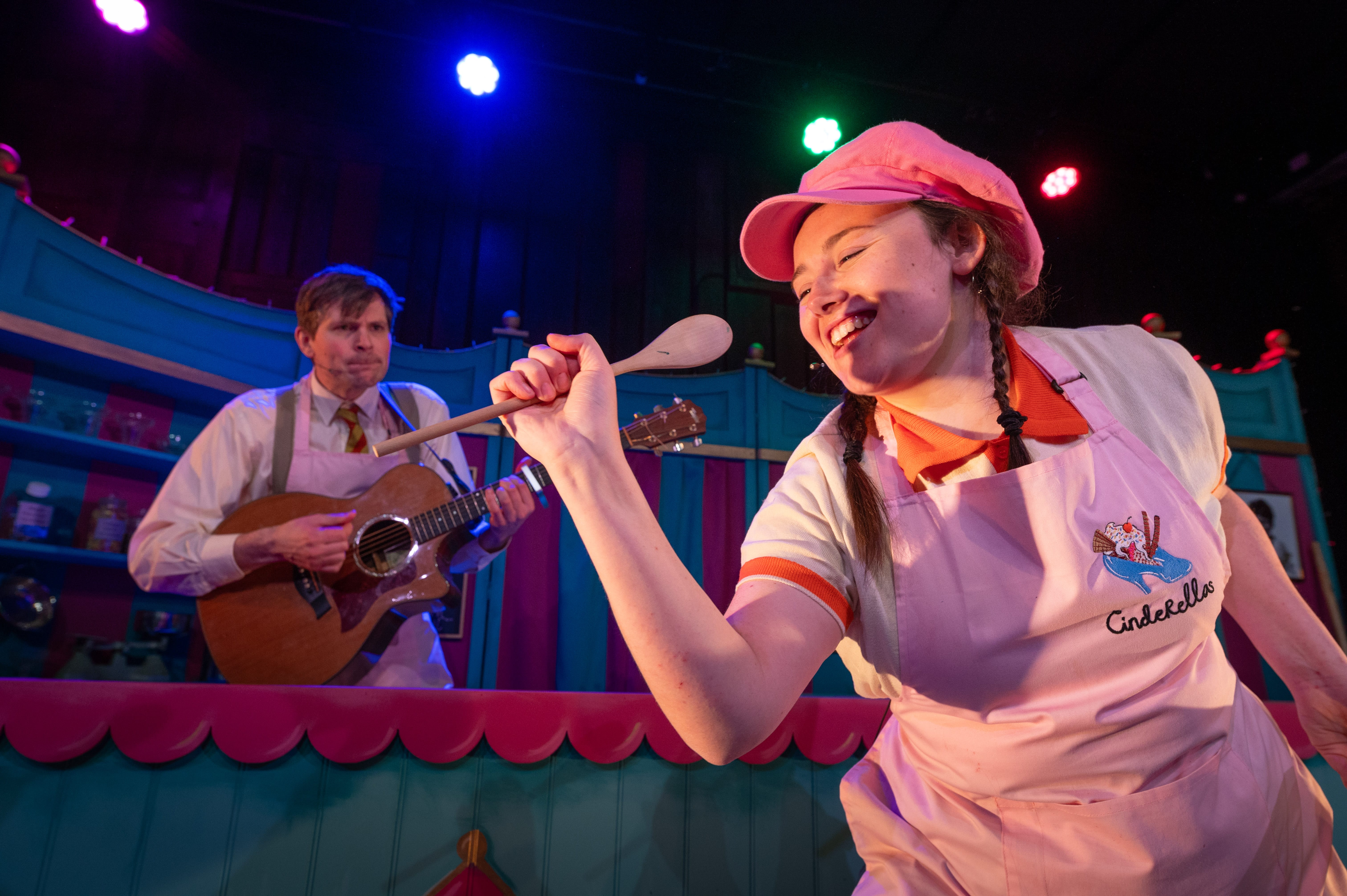
Throughout the show, I was spell-bound by the dreamy folk ballads that made me feel like I’m drifting through the vacuum of space. The instruments consisted of an acoustic guitar and a drum machine, that recorded then played-back sounds. It was a joy to see the children enthralled by the improvised vocals that were looped back. At one point, the performers each made a uniquely strange sound that was then looped back to create a soundscape of many critters populating a lively forest. This gave the music an improvised feel and created an intimate connection with the audience.
Tiny Planet is exciting and imaginative in its approach to puppetry. Only three performers acted as puppeteers, who captivated the audience by bringing charming puppets to life. This is a story that inspires hope in dire situations, that like Alma, we can find our new orbit and a sense of belonging in unexpected places.
A tiny world made big with a beautiful performance by Half a String and their fantastic puppetry that makes this outer-space world come to life. Tiny Planet is the perfect show for families with young children with audience interaction and humour that makes this show just that much better than you thought.
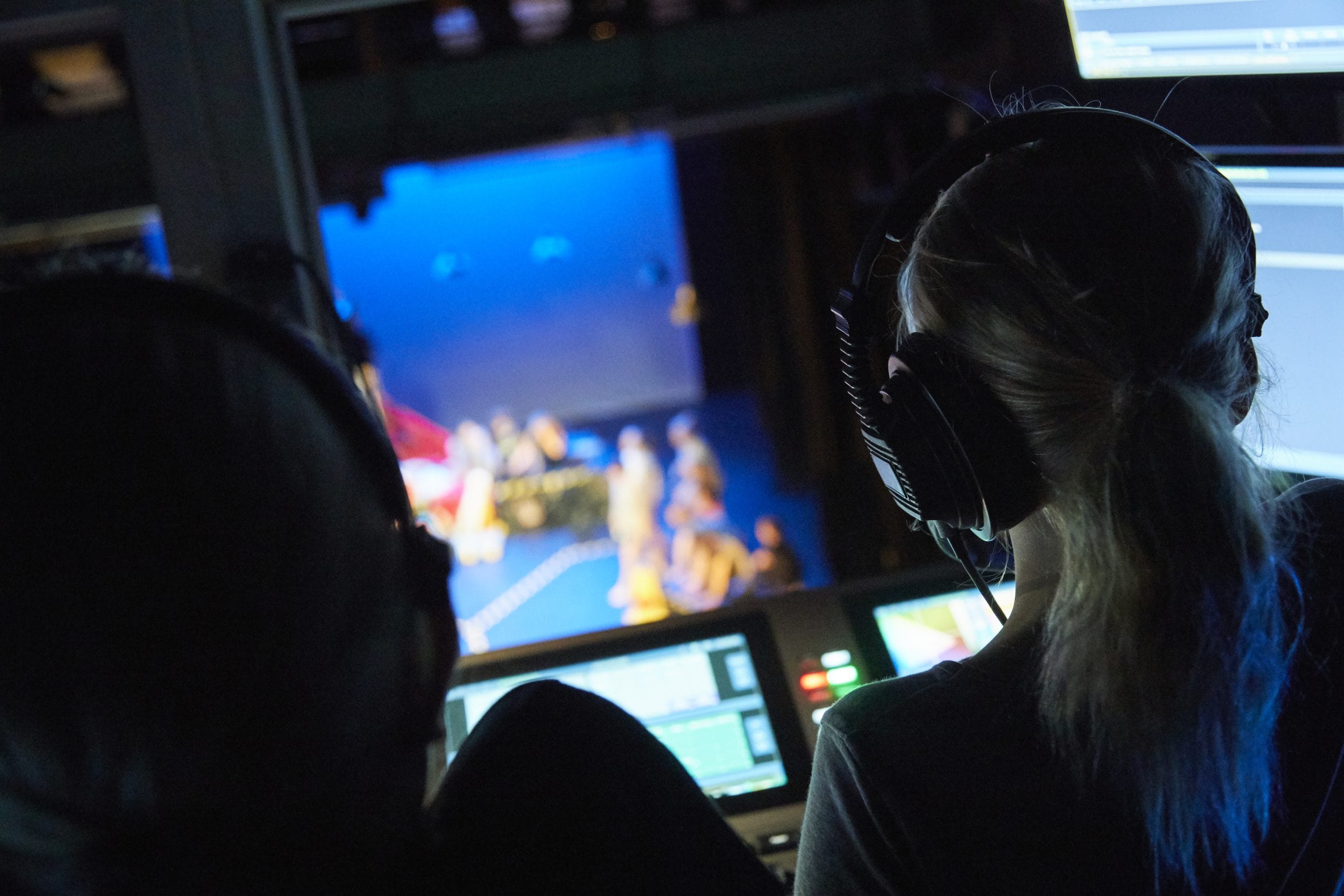
The story follows Alma, who, whilst delivering a wedding cake for her outer-space bakery, gets lost in space and lands on the empty tiny planet. The music created live on stage with the performer’s beautiful vocals and sound board builds up the mystery behind the planet, telling parts of the story through songs. The planet itself is made brilliantly with its mysterious appearance and ability to spin that makes it appear all the more real. Alma’s character is made with such detail that her puppet just adds to the life-like tiny world that Half a String has created beautifully. As Alma explores the planet, the ‘transmitter’ that shows live footage on the big screen on stage and the smoke that comes out of the planet itself only adds to this atmosphere of mystery. On the live footage, the stage lights look like real stars in the night sky surrounding the planet, cleverly making the props on stage look that much more real.
The two storylines that emerge in this show is one of Alma trying to fix her engine on the tiny planet and one of an asteroid floating through space and threatening other planets. These two storylines are told clearly and are easy to follow for the younger children in the audience. As the tiny planet begins to come alive, plants begin to ‘grow’ and creatures emerge from inside, Alma can finally enjoy the planet. The performers, dressed in black to draw attention away from themselves, make it look as thought Alma is floating around the planet. On the ‘transmitter’, with the star-like stage lights in the background, Alma looks as though she really is floating.
As Alma attempts to fix her engine, the asteroid that was shown earlier threatens the tiny planet, and with the engine fixed Alma pushes the asteroid away and ends up floating around in outer space. Then the mystery surrounding the planet only intensifies as a turtle like creature emerges from the planet’s surface and flies out into space to save her. The music created by the performer’s vocals and guitar adds to the mystical atmosphere as this amazing creature floats off into space to save Alma.
The show ends on a brilliant high note as Alma is taken back to the planet and sets up another bakery, bringing new life to the once derelict and barren planet. The transmitter footage shows the bakery’s sign on the planet, ending the show on a hopeful and happy ending that brings joy to those who watch.