








In advance of our upcoming concert featuring the Brodsky Quartet and William Barton, we’re taking a deeper dive into their background and music.
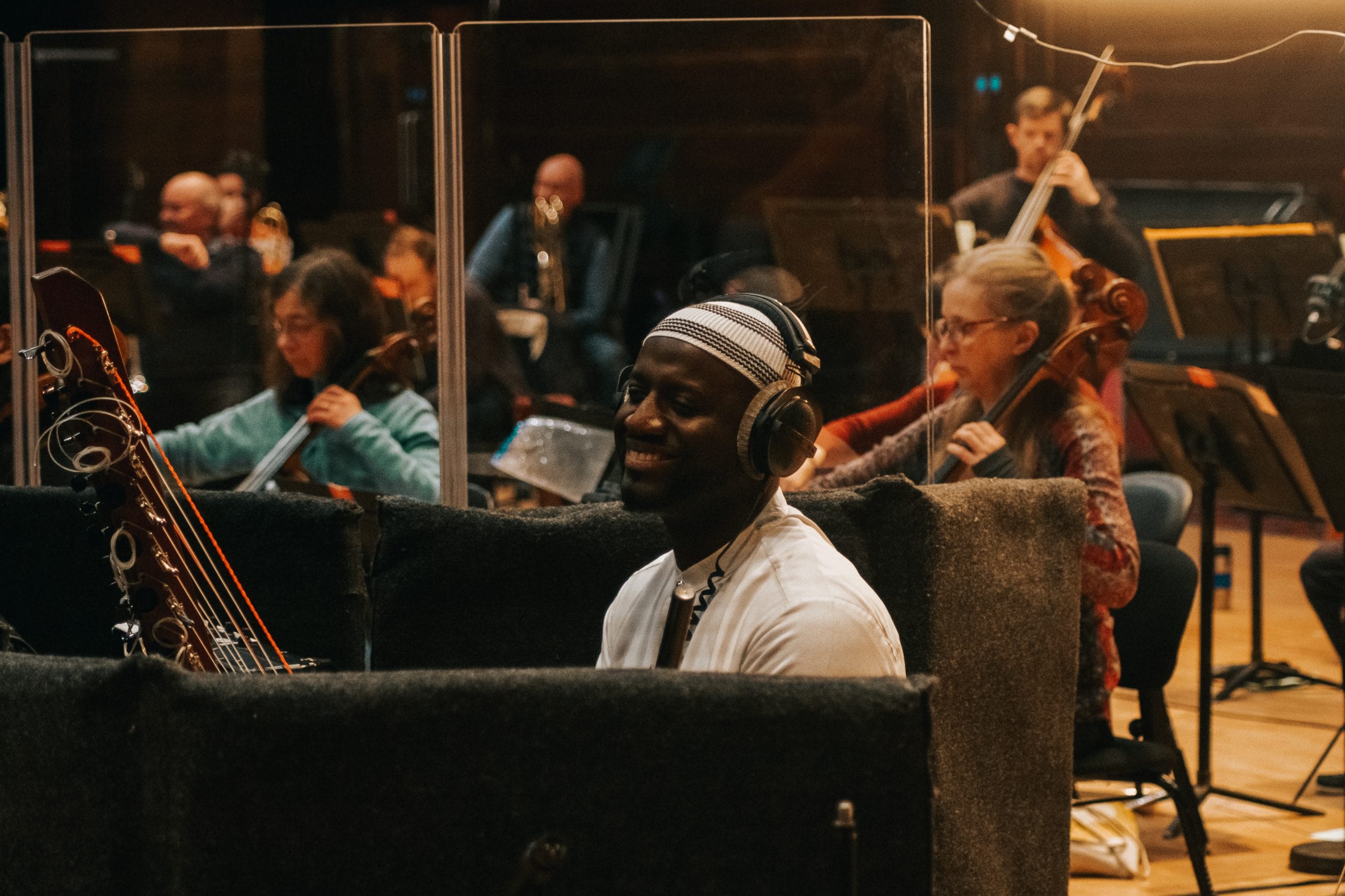
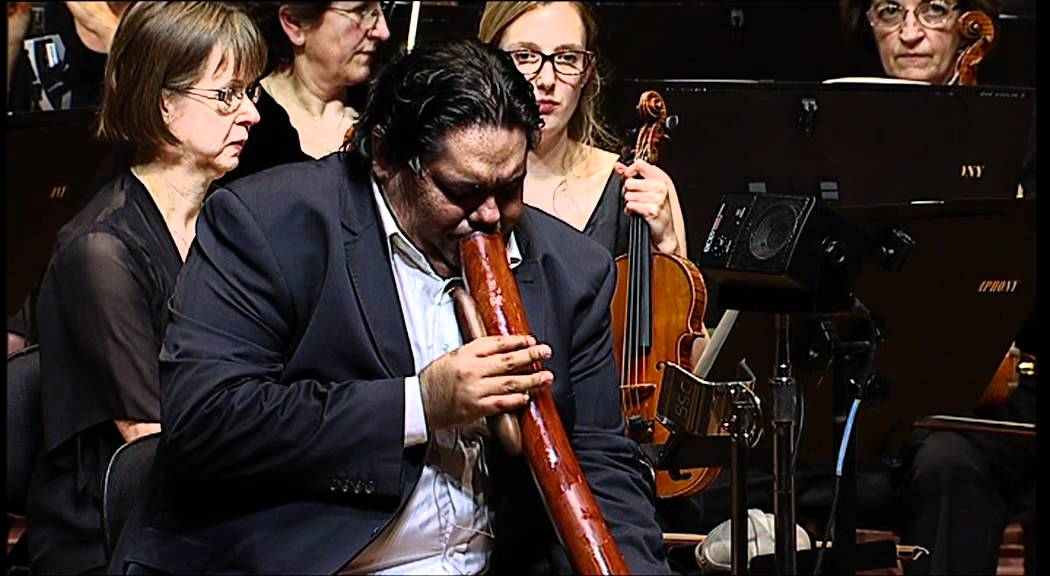
In April 2026, Lakeside’s audience will have a rare opportunity to hear the didgeridoo (‘yidaki’), performed by the internationally renowned Australian composer, vocalist and instrumentalist William Barton, in a programme that includes his own compositions, works by Henry Purcell, Peter Sculthorpe, Igor Stravinsky and more.
Widely recognised as one of Australia’s foremost Indigenous classical musicians, William Barton has played a pivotal role in expanding the presence of the didgeridoo within the orchestral and chamber music. Through technical virtuosity and a sustained commitment to cultural dialogue, he has redefined the instrument’s place within the Western classical traditions, influencing musical language in ways previously unexplored.
Born in Mount Isa, Queensland, Barton began studying the didgeridoo at the age of eleven under the guidance of his uncle, an elder of the Kalkadunga people. From these foundations he has developed a distinguished international career, appearing with major ensembles including the London Philharmonic Orchestra and the Royal Philharmonic Orchestra, and commissioning and premiering numerous works that position the didgeridoo at the centre of contemporary classical composition rather than at its periphery.
Bartons artistic vision has been shaped in part by the legacy of the revered Australian composer Peter Sculthorpe, whose music sought to evoke the vastness of the Australian landscape and engage meaningfully with Indigenous cultural presence. Barton himself said in a recent interview that a major milestone in his career occurred
when he met Sculthorpe, whom he described as “the grandfather of Australian classical music.”
This holds particular significance for Lakeside Arts’ Head of Music Programmes, Dr Catherine Hocking, who had the rare opportunity to meet Sculthorpe during her time working in Australia. For Catherine, who grew up in Australia and has worked closely within its classical music scene, bringing the late composer’s work to Nottingham has been a personal ambition. The arrival of William Barton, an artist deeply connected to Sculthorpe’s legacy, makes this upcoming performance not only musically exceptional but also a meaningful milestone to Lakeside Arts’ programme.


Sculthorpe’s cultural sensibility is clearly reflected in Bartons Programming, which often conjures vivid natural imagery: string lines that recall the distant cry of seagulls, rhythmic motifs suggesting the measured stride of a jabiru, and expansive textures that evoke open terrain. Such musical gestures are not merely illustrative; they articulate a deep respect for land, memory and cultural continuity.
An especially significant example of this environmental and cultural consciousness can be found in Andrew Ford’s String Quartet No.7: Eden Ablaze. The work was inspired by the catastrophic bushfires that swept through Victoria and \new South Wales in 2019, when ford himself was forced to evacuate his family home. Although his property survived, the destruction inflicted upon the nearby town of Eden and its surrounding ecosystems was profound. The quartet reflects both the personal dislocation and broader ecological grief, capturing the devastation of landscapes that, in some cases, included rainforest previously thought resistant to such fire events. In this context, music gestures toward the unsettling realities of climate change and environmental fragility.
The forthcoming performance at Lakeside Arts offers Nottingham audiences an opportunity to encounter the didgeridoo not solely as a traditional instrument, but as a sophisticated and expressive voice within contemporary concert practice. Barton’s programmes frequently combine original compositions with collaborative works, generating soundscapes that move fluidly between meditative stillness and rhythmic intensity. His performances invite listeners into a space where ancient tradition and modern composition coexist challenging conventional boundaries of genre and cultural categorisation.
The Brodsky Quartet & William Barton play at Lakeside Arts on Thursday 16 April, 7.30pm. Tickets are £26 – £28 and can be purchased here.