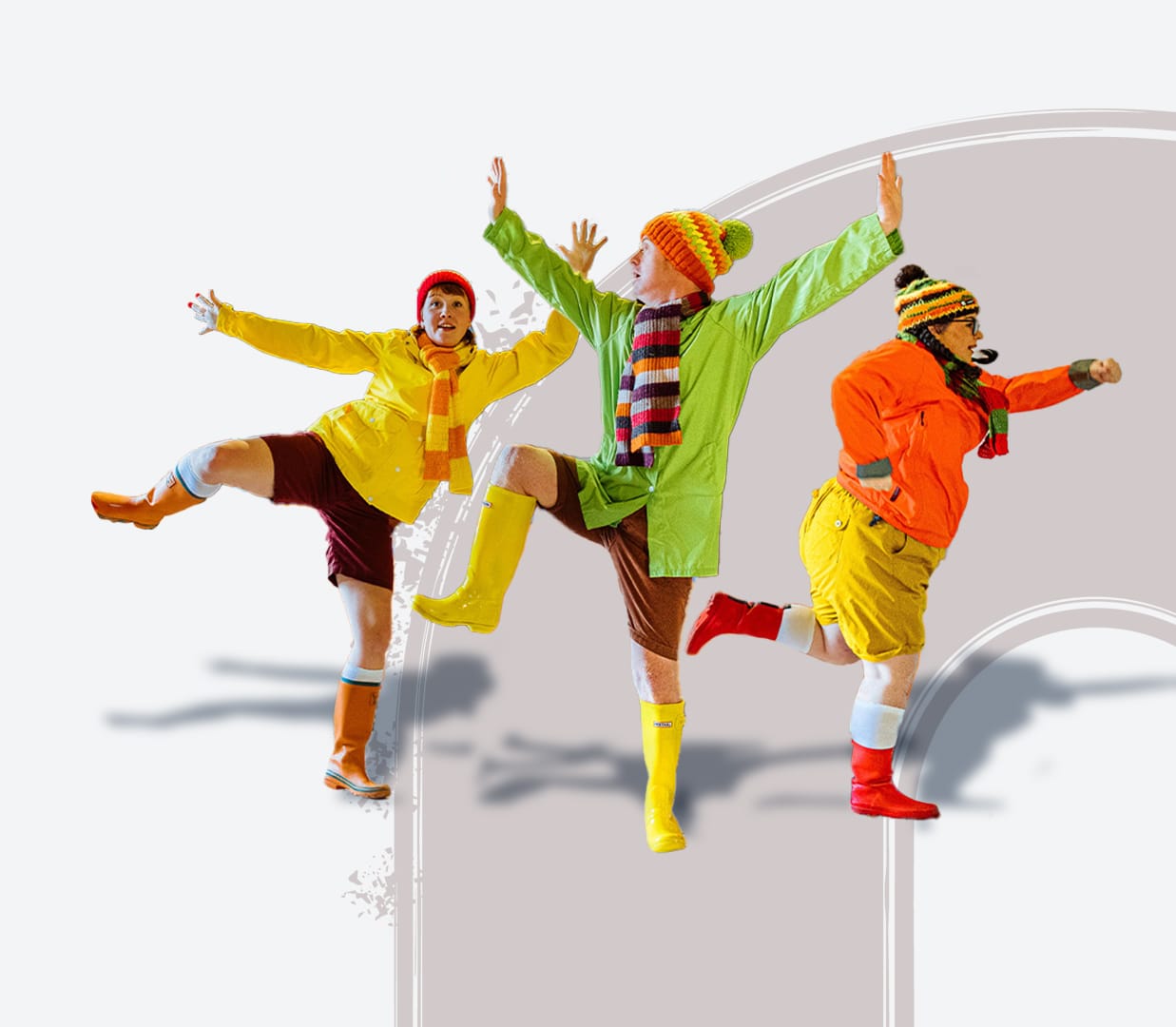




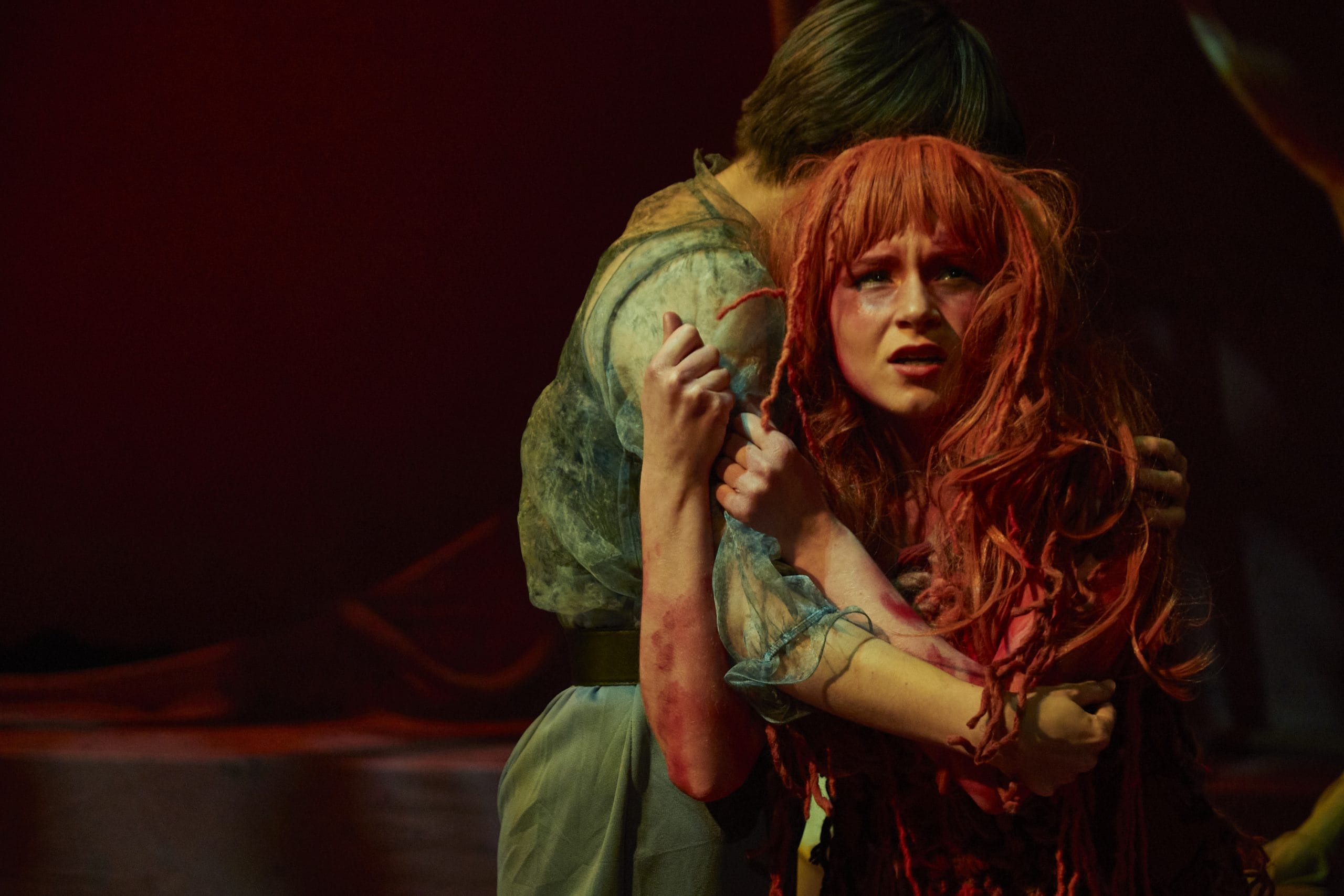






As part of our Young Critics Collective programme, Scarlet Driver and Zoe Lam review Lived Fiction by Stopgap Dance Company.
Reviews
“There is no one correct way to be an audience member.”
A line said at the beginning of the performance. A line that conveys the entire message of the piece. That line has been echoing in my head ever since I left Stopgap’s Lived Fiction. And honestly, I’m still not convinced there is any singular word that would capture what I felt while watching it. It wasn’t just theatre, or just dance — it was something raw, something startlingly human, something that felt like reached into the quiet, underrepresented corners of lived experience and held them up to the light. For me, it transcended traditional theatre in a multitude of aspects.
What struck me first, and stayed with me throughout, was Stopgap’s creative approach to accessibility. Not as an add-on, not as a polite gesture, but as a core artistic engine. Before the show even began, audience members were offered noise-blocking headphones, fidget toys, helpful programs, and a quiet sensory room if needed. These weren’t framed as “accommodations”; they were invitations. Tools that didn’t just make the performance accessible but transformed how it was experienced.
The live audio description was the clearest example of this. Rather than being tucked away or delivered through an earpiece, the narrator sat onstage, fully integrated into the world of the performance. Their descriptions weren’t clinical or functional, they were vivid, lyrical, almost novelistic. You didn’t just hear what was happening; you were ushered deeper into it. Watching the dancers move while simultaneously hearing the language that captured them felt surreal, like witnessing choreography and prose breathe together. It made the stage feel porous, as though the audience and performers were sharing the same imaginative space.
Visually, the production was deceptively simple. Eight orange chairs lined the stage, and a single table held the audio describer’s script. That was it. But the simplicity worked because it was woven into the narration. Every object, every placement, every shift was acknowledged and given meaning. The lighting, too, was quietly astonishing. Shadows stretched and folded across the dancers’ bodies, carving out their shapes, highlighting their individuality, and making each movement feel deliberate and intimate. The dancers’ clothing and physical appearances were described at the start, not as a checklist, but as a way of saying: these bodies belong here. Their diversity wasn’t an afterthought; it was the foundation.
And then there were the duets. These moments felt like the performance had quietly opened a doorway to a sincere world — one where bodies weren’t barriers but vessels, peeled back just enough to let the soul show through. The dancers moved with a kind of unfiltered honesty, drifting around and toward each other with a softness that modern life rarely allows. Their pacing, their circling, the way they broke and re-formed proximity — it all carried the sense of two inner selves meeting without the usual armour of binaries or expectations. The live audio description deepened this feeling, its lyrical phrasing giving shape to emotions that usually stay hidden beneath the surface. I found myself on the edge of tears, not because the moment was sad, bit because it felt like witnessing something our world often forgets how to hold: connection without performance, intimacy without explanation. For a few suspended minutes, the dancers didn’t just move, they revealed something truer, and I felt myself quietly changed by it.
As for what comes next — Lived Fiction feels like a beginning, not a culmination. Stopgap have carved out a new model for accessible theatre, one where access isn’t a backstage consideration but a creative force. They’ve shown that accessibility can expand artistry rather than limit it, offering audiences not just inclusion but a richer, more layered experience. If this is the direction theatre is heading, then the future looks bold, generous, and full of possibility.
Stopgap haven’t just made an accessible performance. They’ve made a blueprint. And I can’t wait to see who follows it.
Lived Fiction’ demonstrates an evolving well-worn unison of beauty, poetry and safety. Considerate work on and off stage makes accessibility and inclusivity feel extremely natural. Before entering the theatre, Stopgap offers visual guides, fidget toys, and ear defenders to name only a few of their access tools. This accessibility is built into the structure of the company of which this performance demonstrates easily, the output of a diverse team leading disability access in dance.
The performance’s on-stage choreography involves audio describer Lily moving among the dancers with a wheeled table, filling in gaps of audience members’ experiences. Their presence is integrated rather than peripheral, firmly guiding but also compromising with other sensual experiences allowing moments for the visual or audible to breathe and take priority. The performance’s words are captioned on a gauze strip above the stage, benefitting everyone in the room, not just Deaf or hard of hearing audience members. Anything that could be lost in visual overlap onstage is mapped into words above. This is supported by the voice of DAN, a testament to all those contributing offstage. The music moves through without demanding much attention, supportive of the dancers throughout. It is a wavy constant, a hazy cushion for their choreography. This further resists any urge to force identical movement. Instead, these Disabled, neurodivergent and non-disabled dancers each bring their own quality to shared material, and the experience is therefore much more honest. Unison here is translation and compromise, a shared understanding. As seems to be the company’s ethos, we are all encouraged to respects our own and each other’s different needs. These stories, these ‘fictions’, are truer to life than any mirrored synchronicity. They are intimately created and sensuous in every movement.
The opening sequence looped, making the start of the performance seem unclear, particularly as audience members (part of the production team) were talking loudly near the beginning to make a point of easing the audience into the start. However, it felt abrupt and unsettling to be unaware of this intention. Using the visual guide beforehand might’ve eased this, particularly as the show doesn’t thread a specific chronology but rather a collection of moments and voices. Nevertheless, this lends itself more realistically to lived experiences, spotlighting each dancer’s identity individually and inviting us into each of their worlds and how they join.
The performance’s ‘well-worn unison’ proved to be the core of the piece, repeated and emphasised towards the end. The dancers are worn through generations, from all places, spaces and stories. And at every conclusion of every breath, in every movement, thrown limb and spiralling wheel, they’re in unison. Skin on skin, again they begin.