











As part of our Young Critics Collective programme, Amelia Blyth reviews Joan and the Dragon by Lost Performers Club.
Joan and the Dragon is a wild, topsy-turvy adventure packed with circus chaos, big laughs and surprising secrets.
Young Critics are an imaginative collective of students who value collaboration and innovation. Together, they review and help shape future theatre programming.
Tail ending the end of Hate-Crime awareness week and the first weekend of half term, the Nottingham-based Lost Performers Club presented its debut performance of Joan and the Dragon, to an audience clad in paper crowns, shields and swords whilst serenaded by the house-music of baroque pop song covers like Britney Spears’ ‘Baby One More Time’ and Chappell Roan’s ‘Pink Pony Club’. The local group, set up by Ria Ashcroft and Circus Hub as a training programme for disabled and/or neurodiverse creatives, developed Joan and the Dragon as a unique ‘feminist retelling’ of George and the Dragon, premiering original songs and aerial circus skills in this vibrant production.
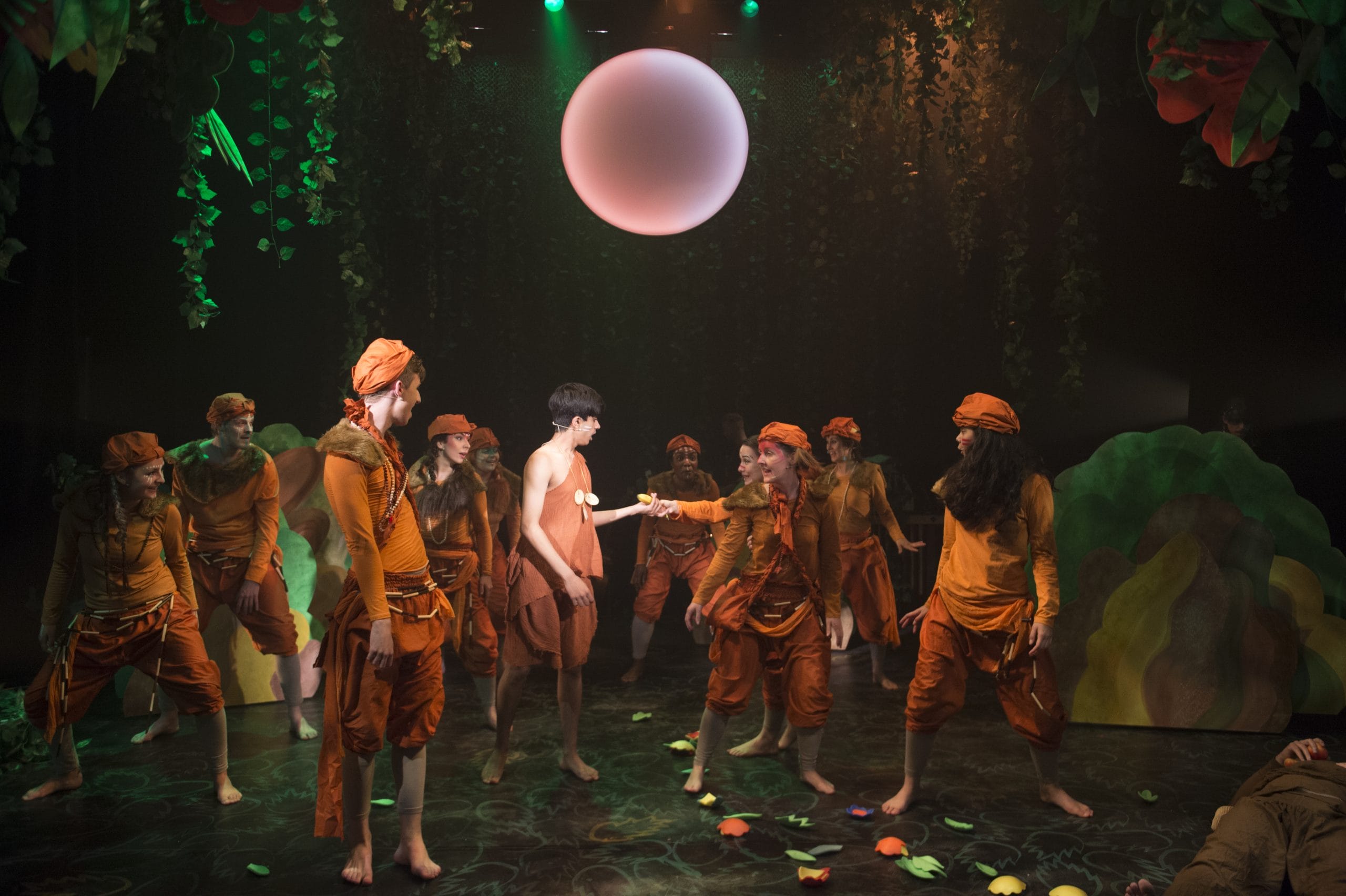
With the first of many original songs, Joan opened immediately by welcoming the audience to Ever Ever Land, the place where its townsfolk sing of ‘eat, sleep, work, repeat’ and promise to never ever step out of line, reliant on the heroic quest of knights to slay the dragons which threaten the supposed peace of the kingdom. The ensemble was dressed in long-sleeve tops and pantaloon-style trousers in pinks, blues, and orange, which would later be embellished with other accessories as the story progressed. This made for eye-catching yet useful costumes. This catchy opening song, delivered by the small ensemble of nine, outlined the central crux of Joan and the Dragon: stick to convention or stand out? Thus, meet Joan. At fifteen, Joan is nothing like the average townsfolk of Ever Ever Land and is beginning to face pressures from her mother, the Queen, to assume her duties as princess, which means dressing nicely, waving well, and smiling, even when you don’t really want to.
As a way of negotiating her own authentic identity, Joan decides to take part in the Queen’s competition to find a knight to slay the dragon. This was a welcome comedic interlude filled with wordplay as knights ‘Sir-Pent’ and ‘Sir-Cumference’ went head-to-head in a silly fight sequence. Eventually, in very ‘Arc-esque’ fashion, disguised Joan wins by dazzling her opponent with her gymnastics skills and wit. Joan becomes the first ever ‘Princess-Knight’ and sets off on her quest.
For me, the stand-out section was the Dragon’s cave scene. The lighting here, an eerie blue-green, created an alluring, mystical environment. In addition, the aerial performance worked well here as the Dragon, who was dressed in a beautiful green-caped costume, dangled asleep inside the aerial hoop.
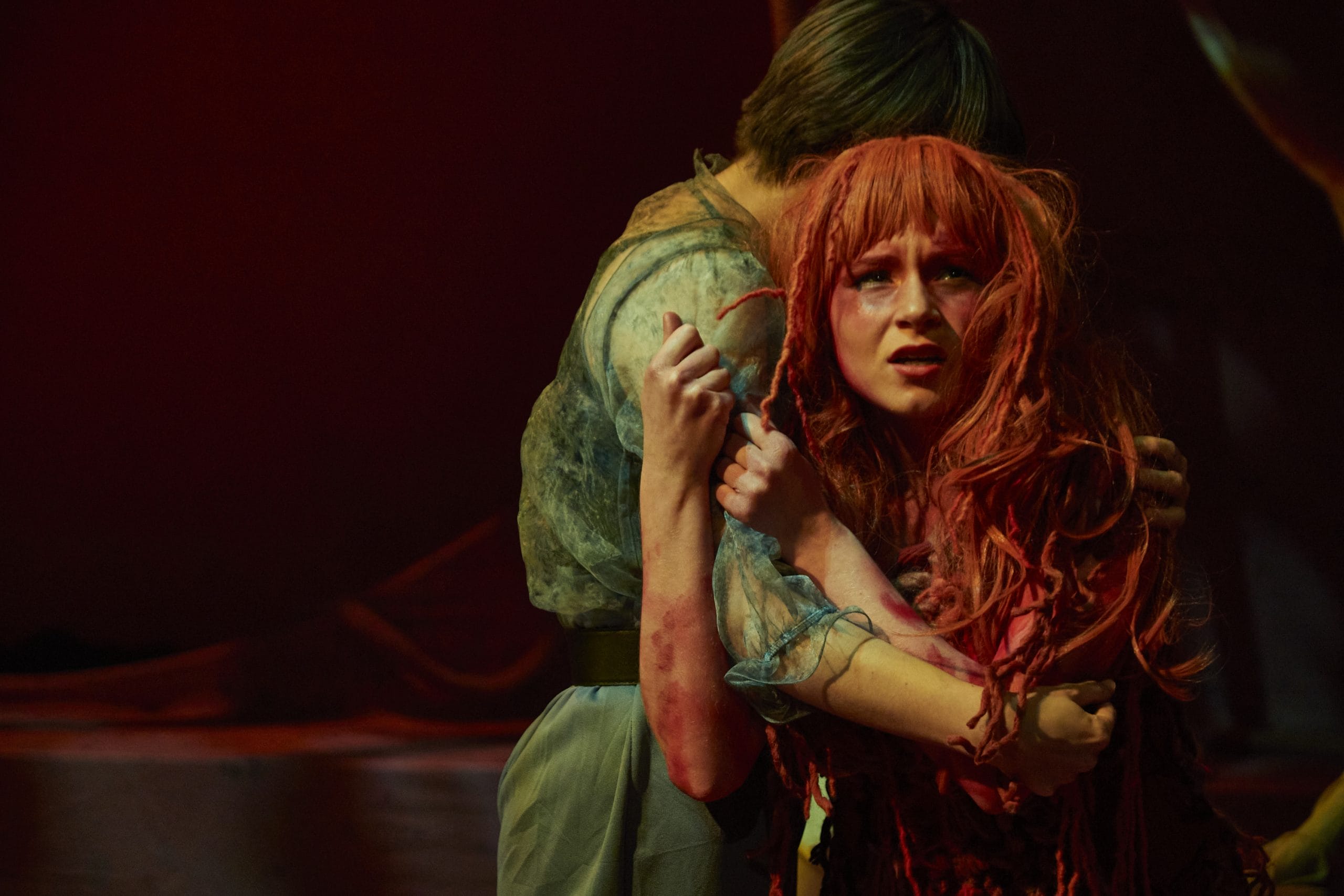
Later, this scene explored themes of colonialism and identity as Joan, after awakening the dragon, discovers that the jewels that adorn the Queen’s crown are in fact stolen heirlooms and the only tangible memory dragons have of their ancestors. I thought the ensemble was especially successful during Joan and the Dragon’s song, executing a striking image of the Dragon’s outstretched wingspan with flags. This stood out as a renegotiation of identity as the Dragon proudly takes up space, mirroring Joan’s own journey in the play. Joan and the Dragon become friends, breaking the traditions that had defined them, and head back to Ever Ever Land.
Finally, the Dragon returns with Joan to Ever Ever Land but is met with fear. Joan explains the truth about dragons and her mother confesses. Her ancestors used to live in harmony with dragons, but, one day, driven by fear, attacked the dragons. The Queen apologises and breaks tradition, symbolically giving the crown made of dragon jewels back to the Dragon. The central messages of the play are made clear – don’t let yourself be driven by a fear of difference; individuality is what makes us unique!
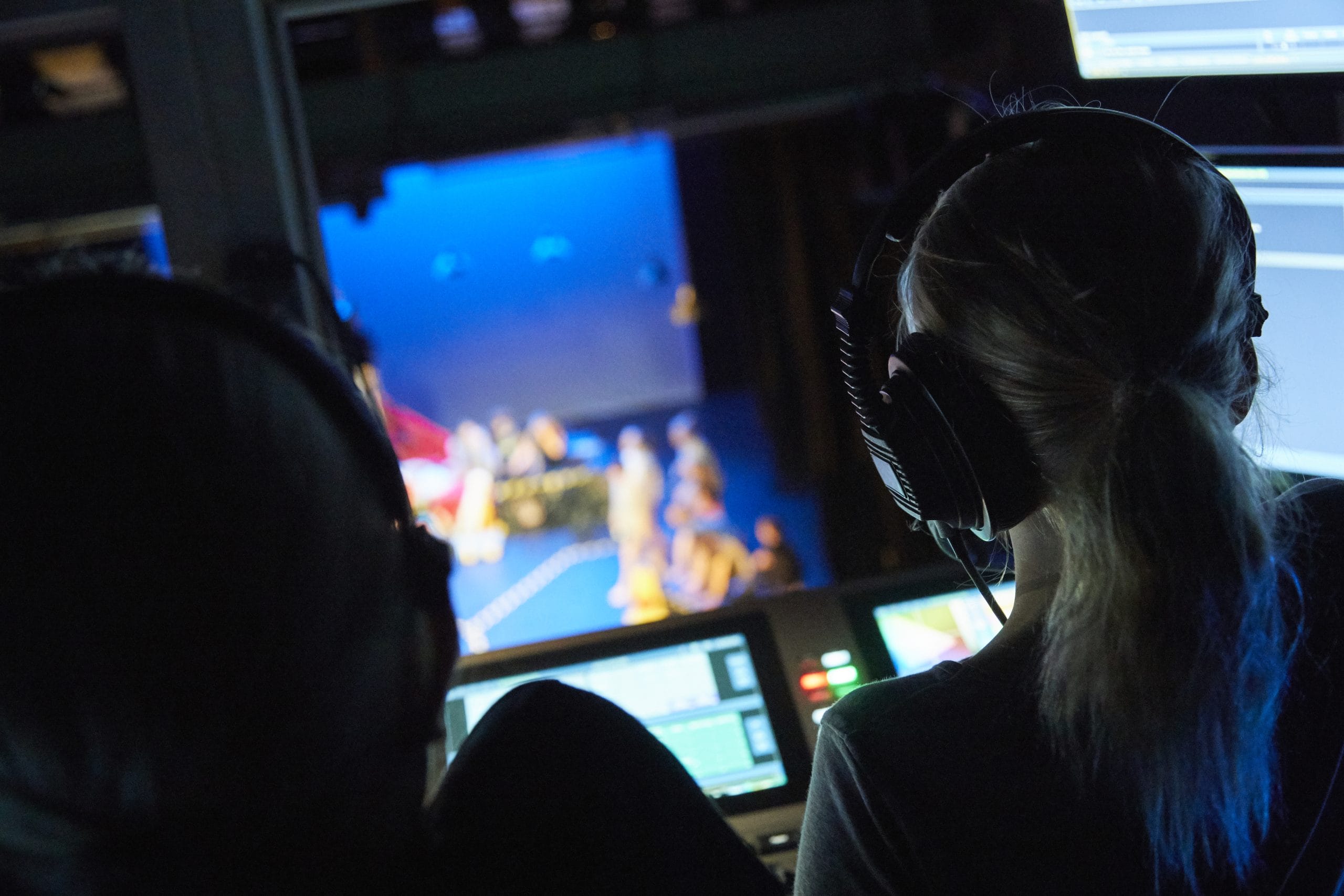
Despite the recommended age of seven plus, the audience seemed mainly made up of under seven-year-olds and their parents. They were engaged, but the performance’s struggle with some technical problems, as well as a somewhat confusing plot and premise, made the production difficult to keep up with at times. For example, the final discussion of the oppression of the dragons may have gone over some children’s heads. I also felt the narrator was underutilised and often contributed more confusion than context. The narrator could have been used to involve the audience more to keep them engaged, especially given its intended audience of children. However, the colourful set, songs and demonstration of aerial skills kept the production interesting throughout. Additionally, the programme’s inclusion of questions to discuss after the show was an effective way to encourage reflection.
Overall, Joan and The Dragon was a fun debut production by the Lost Performers Club, which celebrated diversity and inclusion through its cast and characters while also delivering the message that being true to yourself and not being afraid to go against tradition in order to do what is right is a ‘slay’!