







As part of our Young Critics Collective programme, Cerys McGrath reviews 'I'm a Muslamic - Don't Panik'.
Young Critics are an imaginative collective of students that value collaboration and innovation. Together, they review and help shape future theatre programming.
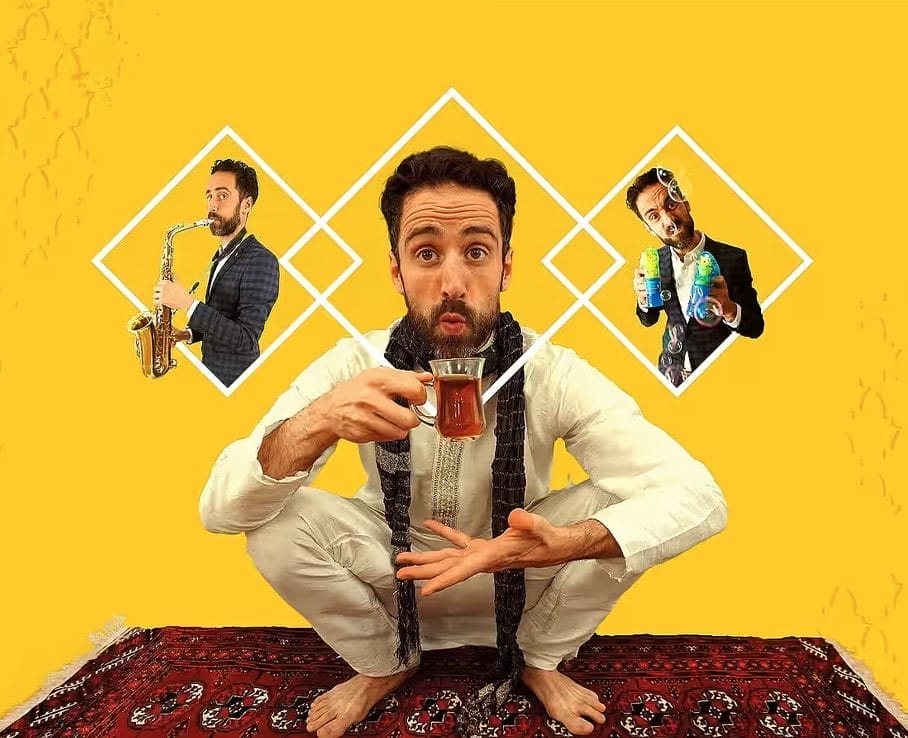
My favourite moment in this performance encompassed the heart of its themes. To a backdrop of Iranian landscapes, Bobak Champion played a gorgeous saxophone solo before sampling and looping it, adding beatboxing, creating a fusion of these influences on his identity. For me, this evocative moment sums up the different facets of cultural heritage which the show considers: what does it mean to be British, Iranian, and into breakdancing?
In I’m Muslamic – Don’t Panik, Bobak embodies different characters to vividly depict (to name a few) his childhood in Bristol, discovering breakdancing in Tehran and a bartender describing a friend’s involvement in the British Defence League. These polyphonic storylines were introduced by different gestures and slick musical cues, as though we were watching cuts in a classic TV show. One of the most engaging storylines narrated the first woman to run the Iranian marathon, and Bobak effortlessly conjured the crowds, the atmosphere, the finish line – it was sometimes hard to believe it was a one-man show.
To be fair, Bobak did have some help. The show opened with a camp, Farsi-accented character who, almost like a Shakespearean jester, brought moments of light into hard-hitting moments, engaging the audience in a liminal space. And engaged we were! Several front row spectators were beckoned onstage to dance, and their enthusiasm to do jazz hands and front kicks was a testament to the lively inclusiveness that Bobak invites.
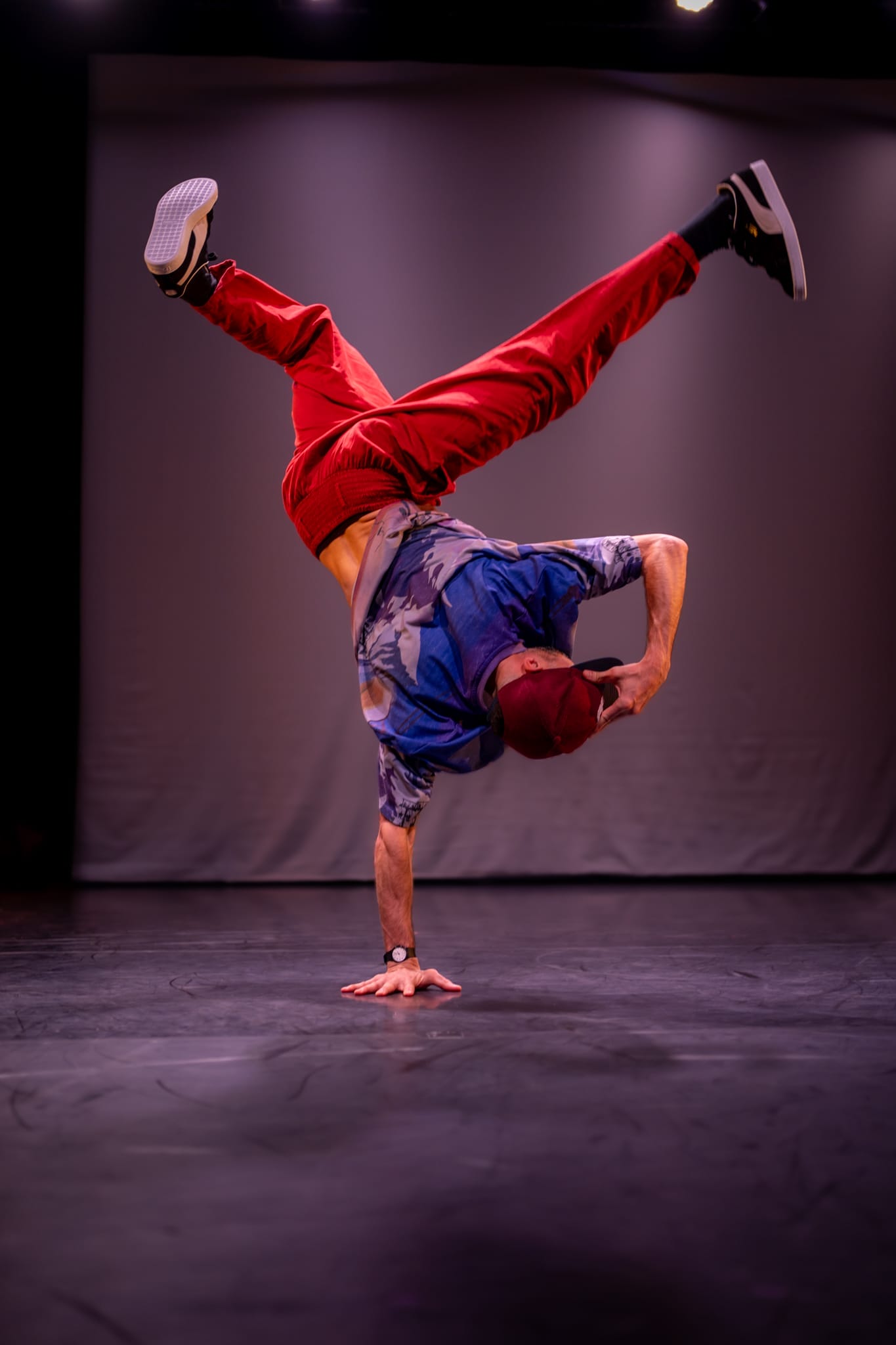
They weren’t Bobak’s only dance partners. On the search for a breakdancing scene during a teenage trip to Tehran, Bobak battles two dancers – Nottingham locals – who are planted in the back of the audience. This scene was the highlight of the show’s dance technicality, with all three showing off backflips, windmills and handstands; clapping audience and strobing lights gave it a real, authentic energy. The inclusion of local dancers throughout the tour resonates with the community that dance provided Bobak growing up, and how it truly is a means of connection – from Tehran to Nottingham.

These moments of unification contrasted with deeply moving portrayals of racism faced by Bobak and his family. Under a single spotlight, the silent still of Bobak holding his saxophone strap like a rope was particularly stark in a show filled with bright lights, music and movement. Real footage from British Defence League marches adds urgency and temporality to the show, but, in what I learned to be his signature style, Bobak playfully dismantled the media’s image of Islam.
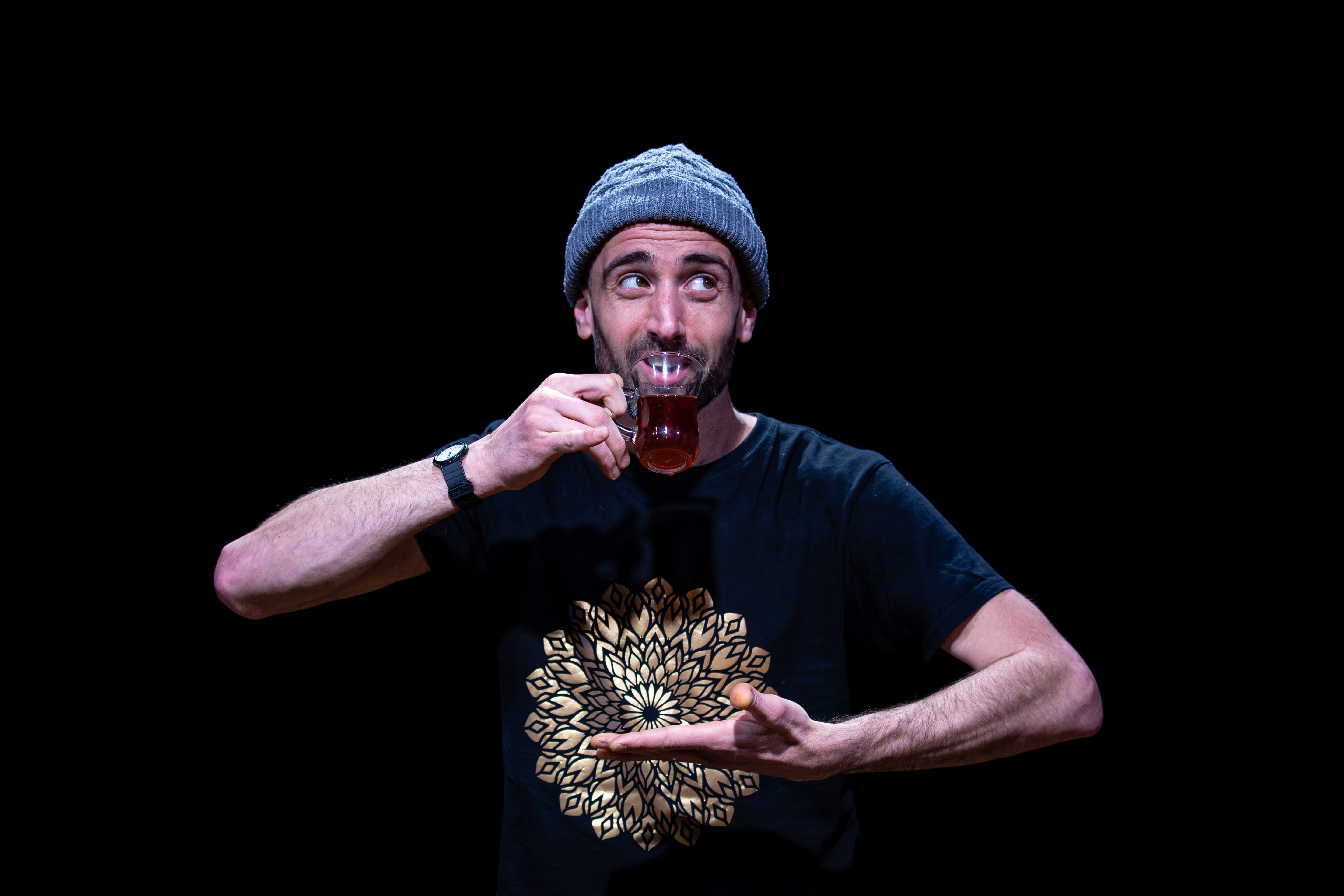
The performance ends with a Persian tea service, which had been glinting in the corner of the stage throughout. I helped to serve this cardamom tea and traditional biscuits, and it was rewarding to hear how much audience members from a range of backgrounds enjoyed the show. In particular, I spoke with three Iranian women who had helped to workshop Bobak’s Farsi-speaking character (reinforcing his thoughtful cultural consideration); they found the show to be bittersweet, in perfectly encapsulating a homeland they hadn’t returned to in a long time. Akin to the community that greeted Bobak breakdancing and visiting family members in Iran, there was a real energy of inclusivity and acceptance in the theatre. Which, in the face of much adversity, is now more important than ever.