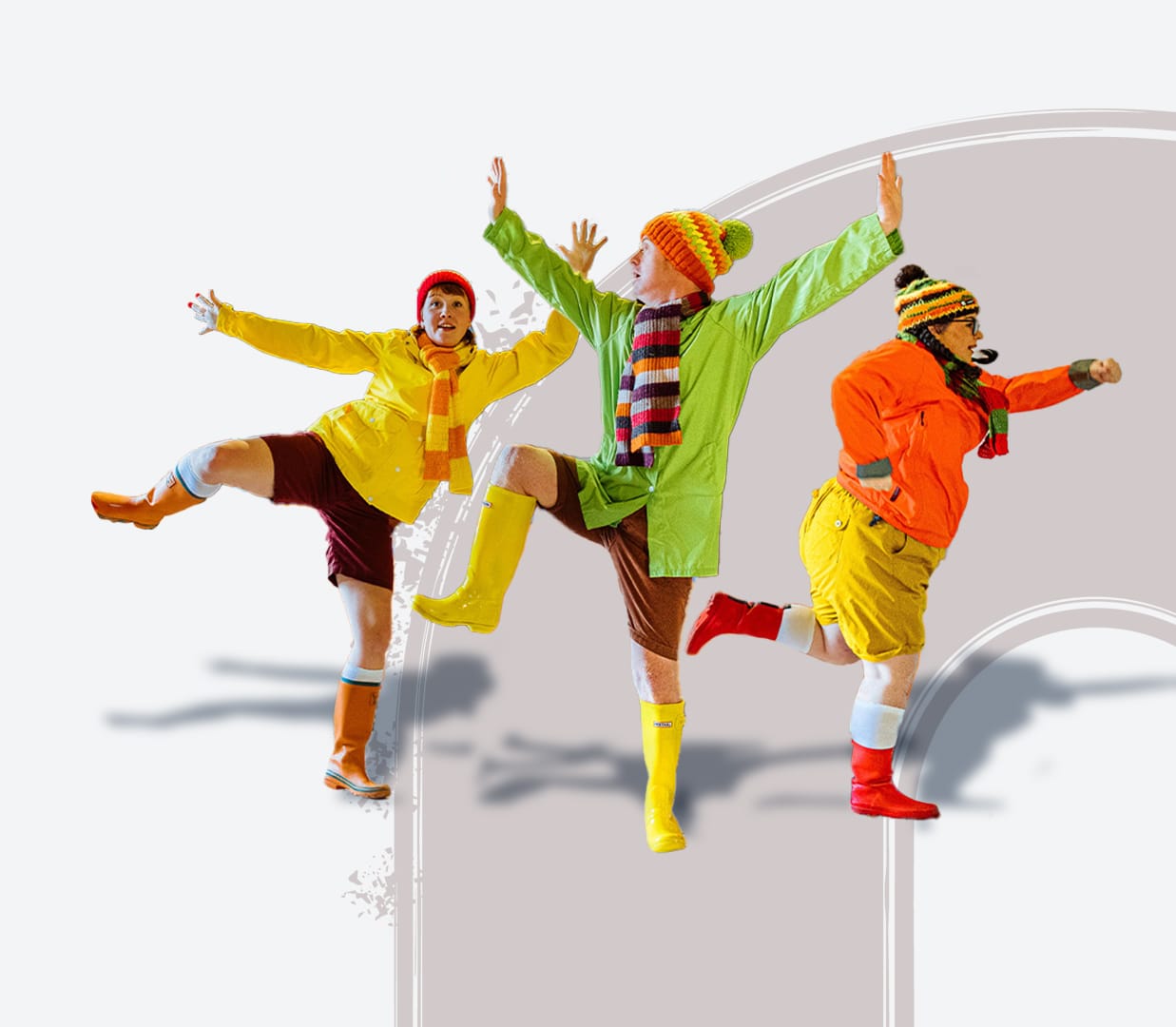
As part of our Young Critics Collective programme, Cerys McGrath, Julian Fisher and Megan Hammond reviewed Brave Bettie.
Written by Tatenda Naomi Matsvai, Brave Bettie was a magical adventure told through poetry, songs, live music and stories, that explore their home heritage in Zimbabwe.
Young Critics are an imaginative collective of students that value collaboration and innovation. Together, they review and help shape future theatre programming.
Reviews
On Mother’s Day, Brave Bettie combined Zimbabwean folk tales with an eco-conscious undercurrent to highlight how little lives can make a big impact on the planet. This playful production follows Bettie growing in confidence and saving her local forest from car-park-isation, with the help of maternal, tough love princess Paida Moyo.
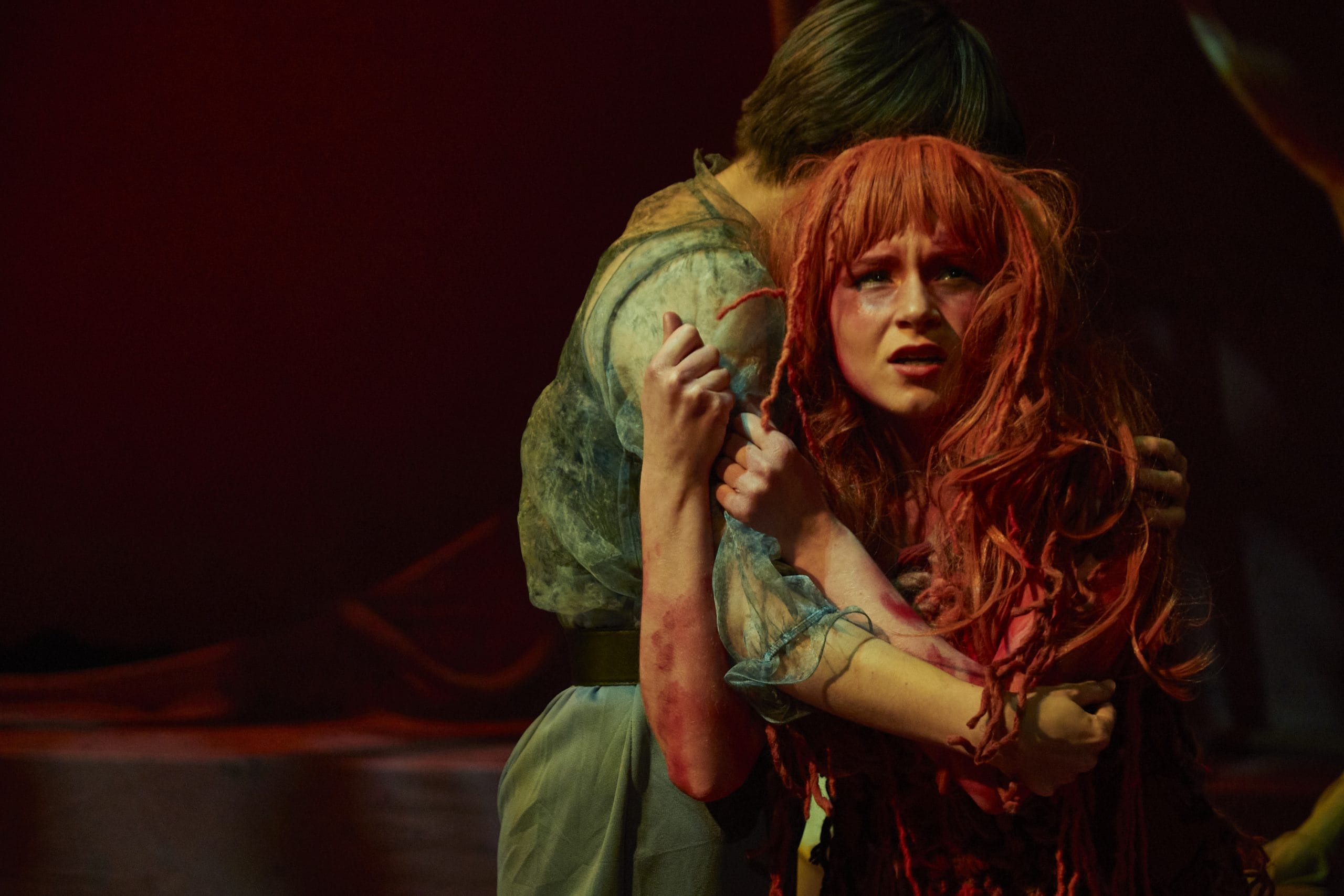
The performance’s strongest moments were its audience participation. Before the story began, Paida Moyo taught the audience how to count to three in the Shona language and a rain dance, and children around me gleefully stood up when Bettie needed their help summoning rain. Bettie developing her magical, eco powers was very engaging for young audience members – this was particularly clear during a fun-filled recycling rap whilst cleaning up litter from the woods. However, the performers stayed in total control throughout these less structured moments, to which more traditional Zimbabwean lullaby served as a beautiful counterpoint to soothe Bettie’s anxiety.
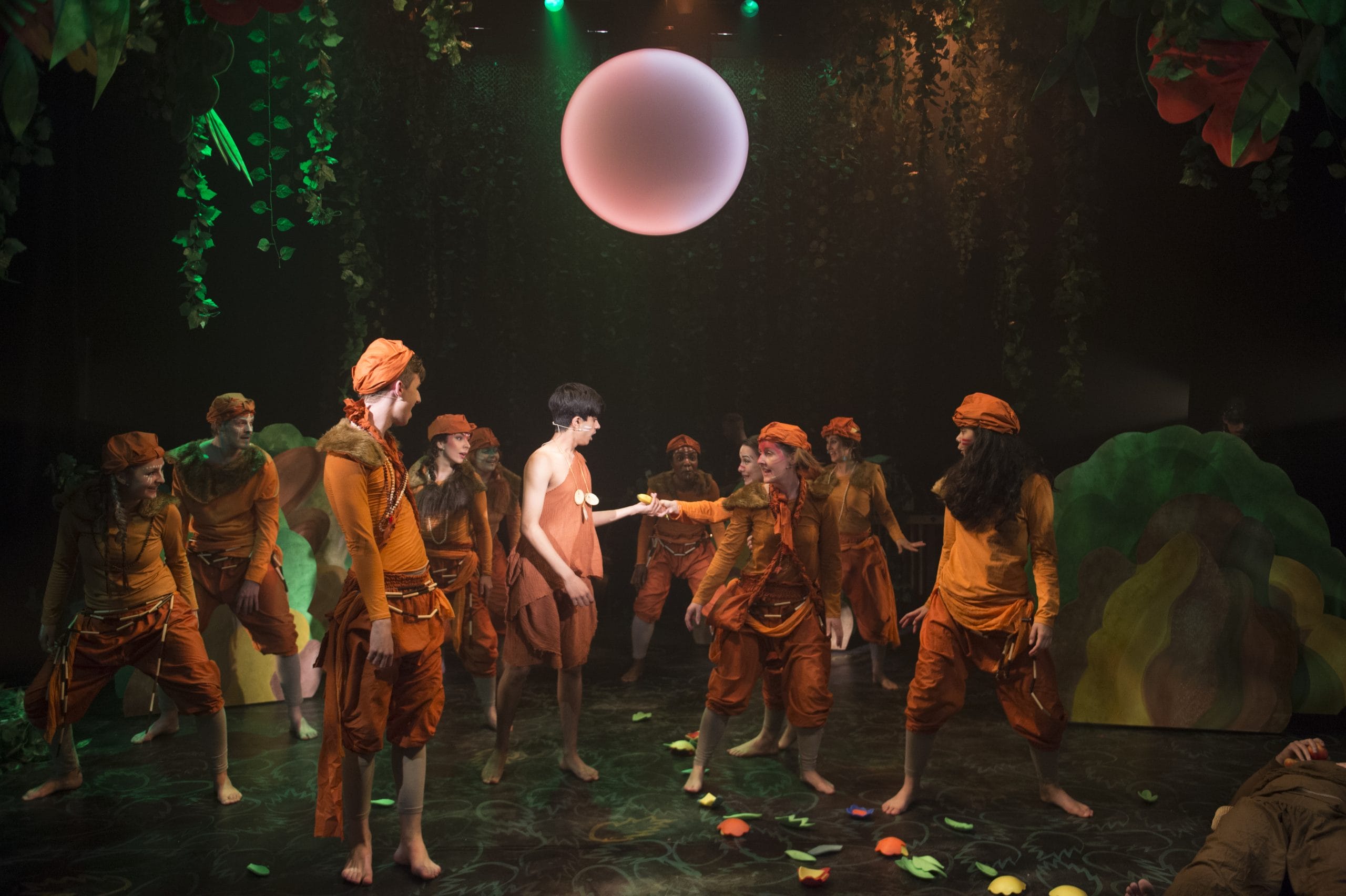
The set was simple but efficient. Although such scene-changes sometimes broke up the show’s momentum, the set encouraged children’s imagination with the different placing of the blocks conjuring rivers, oak trees and gardens. I particularly enjoyed the twinkling fireflies set into the forest backdrop. The dim lighting furthered this sense of nighttime but meant that it was sometimes difficult to fully see the performers and some children mirrored Bettie’s unease in scarier moments.
With various steps to save the oak and unlock four powers for Bettie to become a true forest guardian, the plot was multi-faceted and felt quite ambitious for a 45-minute production. Therefore, visual aids such as a map or a checklist could have been useful to show younger audience members Bettie’s progression on her journey… because the message underpinning the story was Bettie’s increased confidence in herself! The show clearly establishes her insecurities and begins to show what she learned from Paida Moyo, but having a fuller resolution of her character development, such as a clear wish on the final shooting star, would have brought this out more.
There were also slight issues with pacing throughout – younger members of the audience may have struggled to follow the initial story of Paida Moyo, which was a shame as this was the plot’s key background and an empowering take on the traditional Princess tale. More moments of pause and slowing the dialogue down could have helped the audience to digest the story, as this action-packed adventure sometimes felt a bit rushed.
Ultimately, this is a strong show for a cast of two, who vividly conjure the magical woods and eco-friendly personal development. While a tighter, slower format could have engaged younger audience members, the show’s key themes shone through and this was a refreshing family treat, fitting for a Mother’s Day afternoon.
A mystical forest is about to face destruction. Bettie feels powerless to prevent the loss of her woodland sanctuary, until she meets Paida Moyo who helps inspire bravery within her heart.
Brave Bettie is a children’s production in collaboration between Half Moon and Z-arts productions. Half Moon is an organisation that actively helps young people participate in theatre and manages touring. Z-arts is an arts centre that provides opportunities for children and families to express their creativity. This production is written by Tatenda Maomi Matsvai, who previously co-wrote the moving Hot Orange, a tale about friendship and basketball. In this production, Tatenda draws from her Zimbabwean heritage to weave a narrative full of energy, centring on friendship and empowerment.
Brave Bettie is a about a girl finding the strength to stand up for her woodland, in the face of a city council that want to tear it down. It uses a simple yet effective set design consisting of moving blocks and stairs, to evoke feelings of a vibrant woodland. The cast consists of a duo, Joanna Nsianguana as Brave Bettie and Abena Adoma as Paida Moyo. Having only two characters on the stage poses a challenge of keeping the audience engaged, but Brave Bettie succeeds in portraying characters that the audience cares about. Bettie is very relatable to children as she is naive, energetic and timid. In contrast, Paida Moyo acts as the confident mentor, while showcasing moments of vulnerability and humour, which resonated with the adults in the audience. This dynamic of friendship is what drove the narrative forward, as it’s through Paida Moyo’s help that Bettie finds the courage within her.
Throughout the show, we got a taste of different musical genres that perfectly complimented each scenes tone. At one point, the duo began dancing and singing to invoke rain. The audience were also encouraged to take part, which was a joy to witness as the children mimicked the arm gestures with big smiles on their faces. This interaction gave the audience a greater intimacy with the narrative, as they felt responsible for moving it forward. While there were many other stellar musical performances, they would have benefitted from making audience involvement a
recurring theme, especially for the last scene where Bettie takes her stand.
Beyond pure entertainment, Brave Bettie has a powerful message at its core. The importance of nature and our responsibility to protect it are constantly communicated throughout the show in many ways, such as when the duo clean the woodland of rubbish. The story shows Bettie living in harmony with nature rather than abusing it for selfish gain, which the council seem to represent. Yet, once they see the importance the forest holds for Bettie, they relent. This is an inspiring outcome because it highlights the power of activism and the importance of being brave enough to fight.
Overall, Brave Bettie is a delightfully engaging experience with many memorable musical performances and a positive message for the younger generation.
Half Moon’s ‘Brave Bettie’ is a children’s performance that cleverly manages to encapsulate a multitude of key messages for its young audience. The theatre company prioritises sustainable children’s small-scale theatre, and Brave Bettie is a performance that – although at times struggles with pace and engagement – highlights their keen green motives, as well as encourages children to stand up for what is right and celebrates heritage through the show’s diverse storytelling and Bettie’s increased bravery.
I really enjoyed how the performance fore fronted the importance of staying connected to our local environments, as well as being in touch with our heritage. Abena Adoma explores Zimbabwean culture in an accessible way, teaching children to learn how to count to three in her language Shona, and then encouraging them to share their favourite animals, bringing one of the messages of the show (care for animals) to the forefront of their minds before the performance has even started. As the show begins, Bettie is reading a story about Paida Modo – a fictional Zimbabwean princess who essentially saves her village from colonialists. The story is shared to provide context for the rest of the narrative, yet whilst undoubtedly both a key message and key for understanding the narrative due to unfold, the recounting of the story was incredibly fast paced, and even I, as a 21-year-old, struggled to keep up with what was happening. Children began to appear restless and unengaged with the story being told, and the overarching themes became lost in the fast-paced speech and lack of action / interaction with props.
The narrative then evolved into the main story; Bettie goes on a nighttime adventure to save her local woodland from being made into a car park, with her magical new friend Paida. I really enjoyed the episodic nature of Bettie’s story and provided multiple opportunities for the children to engage with the action. She goes on a journey, using a map from her trusty backpack, and on her adventure comes across obstacles that she overcomes and helps the environment. The rain-chant that Abena Adoma taught the audience at the start of the show successfully engaged the audience; the children all joined in, and it brought them directly in the action on stage, allowing them to feel the satisfaction of group effort and community to help the environment. They were able to witness the success of their chant, and in collectively singing, interacted with the characters on stage, and felt part of her mission to help wildlife. In engaging with the children in this way, the pair of new friends taught the audience about the importance of litter picking, protecting wildlife, and looking after nature, and in turn Bettie learnt about the importance of self-confidence, bravery, and motivation.
Despite the engagement in these environmental missions, the children’s attention was stilted slightly in between these interactive environmental messages by slightly monotonous stage changes. Between each setting and its respective adventure in nature, Joanna Nsianguana and Abena Adoma (as Bettie and Paida respectfully) rearranged the stage into new terrains, which did prevent the staging setup from feeling stagnant, but felt slightly laborious and disrupted the pace. At these points, children became restless and confused, and the background music was not enough to keep them engaged, although their attention was soon recaptured by the commencing of each new scene.
My only other hangup about the show was that it was set at nighttime, and I don’t entirely think that the show benefited from being set as an adventure in the night. More than the whimsy, mystery, and peace that the nighttime setting provided with twinkling lights, there were moments where the darkness felt scary to younger members of the audience, and I do not think that the play’s message and plot gained anything by being set at night. I wasn’t keen on the idea of Bettie leaving her garden in the middle of the night without telling anyone, especially considering the interjection of her mother’s voice at the start of the performance explaining that she can read her book outside before bed but *must not leave the garden*. Bearing this in mind, the message that is sent when Princess Paida Moyo encourages Bettie to leave the garden, does not promote key stresses of stranger danger, listening to parents, and staying safe in the dark that I would expect in a children’s show. It was something that played in the back of my mind throughout the whole performance, and I struggled to understand how Bettie was able to safely traverse a woodland environment away from home safely, even in a fictional story.
Despite the pacing of the performance not being as productive for an audience of young children as it could have been, overall, Half Moon’s green initiative did come through strongly, and they were able to include a multitude of powerful and important messages for the children. Each of the environmental challenges involved moments where the children were strongly engaged, with a recycling rap song, an interactive rain dance, and a search for brightly coloured leaves, and on top of their environmental endeavours, Bettie and Paida grow in confidence and bravery with the help of their new friendship, a message that stays strong, even though the intermittent pace.