







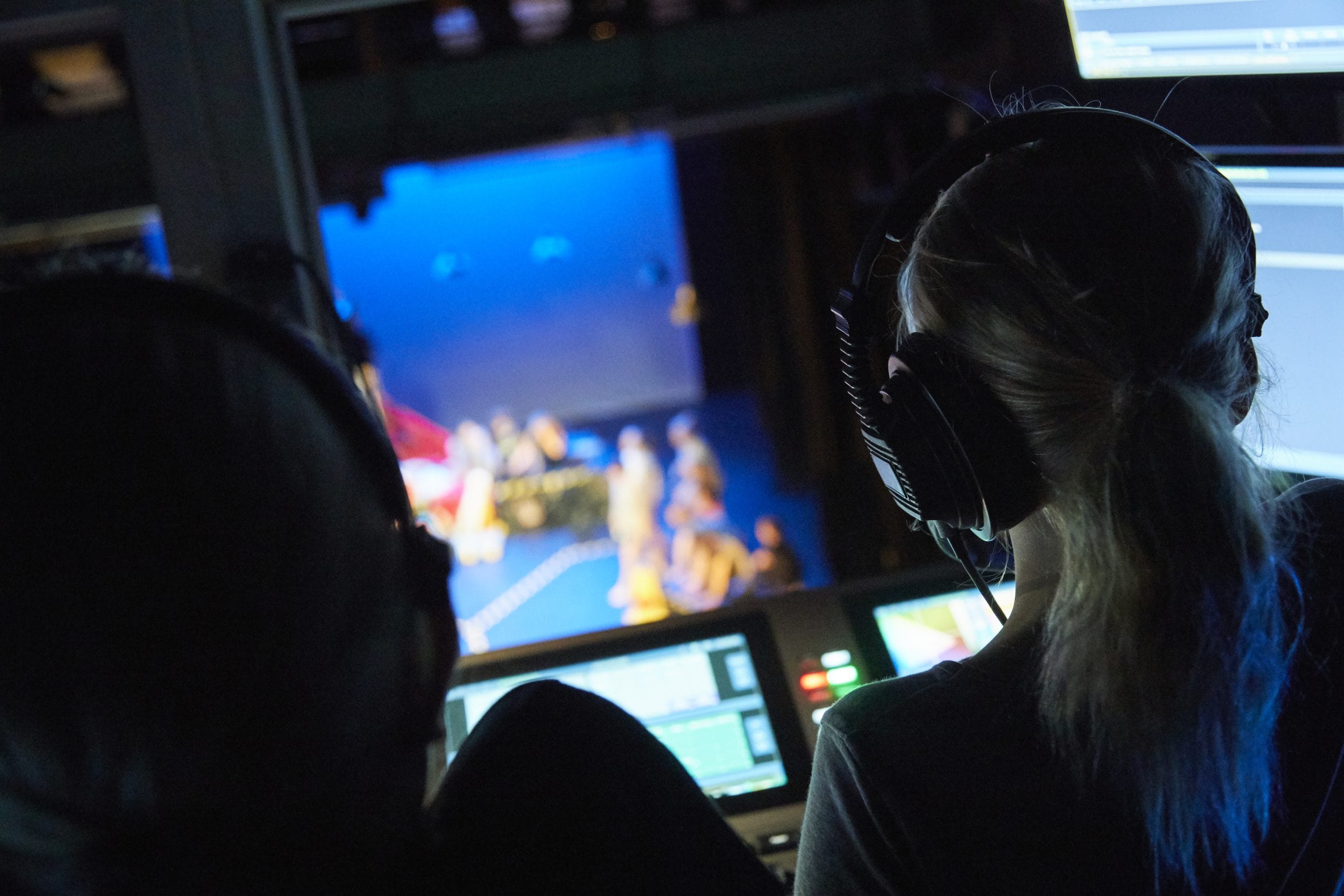




Our talented group of Young Critics recently reviewed Trouble, Struggle, Bubble and Squeak by the super talented, and lovely Victoria Melody.
Young Critics are an imaginative collective of students that value collaboration and innovation. Together, they review and help shape future theatre programming.
Reviews
Trouble, Struggle, Bubble and Squeak, brought to us by ‘Fringe Legend’ (Time Out) Victoria Melody, is not only seriously hilarious and entertaining but heart-warming, poignant, and powerful.
It is also the first show directed by renowned comedian Mark Thomas, and you can instantly see why he was so eager to get involved with this project. Combining stand-up comedy with theatre and even social anthropology, they have created a genre-defying piece that feels excitingly original and fun.
Victoria Melody defies expectations of what a comedian is, bordering more on being a thorough and committed documentarian. The process through which she finds the material to focus her shows on involves utterly immersing herself within niche communities, particularly those of hobbyists, for years at a time. She observes them, discovering the unique humour and raw humanity behind these communities.
This time, the focus is on her newest community: the Diggers.
No, not people who just love to dig holes, but a radical movement that arose during the English Civil War. It was during this period of extreme hardship and starvation, that a group of ‘radicals’ sought to reclaim land, turning it into shared gardens so they could feed themselves and their neighbours. Of course, the landowners responded swiftly by violently evicting them, but the Diggers kept going, persevering and planting the seeds of an idea that has never quite died. As Melody points out, this feels remarkably familiar; with living costs constantly on the increase, without a rise in wages to reflect this, and with far too many living close or below the poverty line.
The original Diggers are long dead, but there is still the Civil War re-enactment society in Brighton! There she finds those who take up this mantle, people who resist and reclaim what should belong to everyone, whether against the gun-wielding landowners in the 1640s or the bureaucracy-loving council officials of today. They are living exemplars of those who put community first, and post-show, you are left feeling uplifted and emboldened to follow suit, continuing the Digger legacy!
What’s astonishing is how Melody completely avoids drab historical lectures or sickening moral grandstanding. You can clearly see why she is accepted so readily into these groups, as she approaches people with such a rare, authentic interest, devoid of judgment and full of empathy. She sees the best in them exactly as they are, and suddenly we see it too.
She has created a truly transformative, transportive experience. You feel lifted out of your theatre seat and dropped onto the hills of Whitehawk, Brighton. In this one-woman show, Melody cedes the spotlight to these remarkable people, and coupled with the beautiful stage design by Katherina Radeva, and sound recorded by the citizens of Whitehawk themselves, they seem to actually be present.
Trouble, Struggle, Bubble and Squeak is a rare kind of show that leaves you wiping tears of laughter and tears of genuine movement at the beauty and strength of humanity.
Written and performed by Victoria Melody, and directed by Mark Thomas, Trouble, Struggle, Bubble, and Squeak is the type of performance that inspires audiences. It speaks on the real lives of individuals residing in the Whitehawk council estate in Brighton, speaking on their achievements to better the community for all. There were so many components of this incredible performance I could discuss; however, I have complied my thoughts into what stood out to me the most.
The use of multi-roling in this production was enticing, to say the least. Victoria’s ability to shift between characters was not only technically impressive but emotionally generous. Her comedic portrayals were tasteful, each voice distinct, each moment laced with humour that never tipped into caricature. Comedy here was not a tool of mockery, but of reverence. Through Victoria’s voice, the characters came alive with warmth and wit, honouring the efforts of those who have shaped their community.
Visually, the stage was striking. Posters of the individuals discussed lined the space, along with buckets of crocheted vegetable produce, inviting us to delve into their histories. A felt banner of Whitehawk unfurled and evolved throughout the performance, a tactile symbol of pride and place when discussing the bramble bush. This evolving visual thread grounded the narrative in lived experience, reminding us that history is not static, it grows, it breathes, it belongs to us.
The productions’ structure was seamless. Emotional beats were well timed and thoughtfully spaced, allowing humour and poignancy to coexist without jarring transitions. The historical information was delicately embedded within the narrative, never forced, and always memorable. The important pieces of history were placed at the forefront, easy to absorb and impossible to forget.
Lighting was yet another noteworthy component. It worked intrinsically with every twist and turn of the performance. Spotlights drew deep focus to Victoria, allowing her multi-rolling and emotional beats to shine, while floodlights bathed the stage in communal warmth, bringing the community, quite literally, into the light. The lighting didn’t just illuminate the performance; it illuminated their purpose.
This was performance that respected its subjects, celebrated its community, and invited its audience to laugh, listen, and reflect. It was a comedy with a conscience, it had structure with a soul, and a beautiful narrative with a heart.
Trouble, Struggle, Bubble and Squeak is a heart-warming show presented by Victoria Melody, and directed by Mark Thomas, that champions community spirit and embracing the unknown. Audiences are treated to a comedic retelling of Victoria’s time living amongst the deprived Whitehawk community in Brighton, where she joined a historical re-enactment society ‘because we all deal with divorce differently!’. The show demonstrates an astute balance between comedy and storytelling, combining humorous accounts of personal mishaps, with recounts of the genuine impact real people made. By the end of the performance, I felt no one in the audience could doubt the actions being celebrated, and the surprising significance of vegetables.
The show is structured around multiple anecdotes, with each tale prefaced by its main character being introduced on a large cardboard cut out. This not only clearly signalled who was to be the hero in each story, but allowed Victoria to establish a unique and humorous voice or physical mimicry to represent each individual. Her physicality whilst embodying a man called Hammer was particularly memorable, as she attempts to portray the stature of a larger man, to great amusement. Every recount celebrated the achievements of normal people, with Victoria taking care to emphasise the impact they made to Whitehawk. One such example is the description of how one local endeavour became a huge movement providing hundreds of meals to people during lockdown. Importantly, even whilst emphasising the success, Victoria maintains the comedic aspect of the show, by including a description of merrily driving around Whitehawk giving out vast quantities of donated cheese.
Despite the focus on community stories, the historical re-enactment society is never forgotten, as Victoria is dressed in an authentic English Civil War Musketeer outfit. The unusual attire adds to the comedy of the show, especially when we are told of the spontaneous festival that ended with a not so accurate re-enactment of the fight between the Diggers and the landlords.
The set design was simplistic, orchestrated for practicality and to visually depict the places Victoria described. Personally, I felt the colourful backdrop portraying the buildings and fields of Whitehawk added a homely charm to the stage, one befitting of the community. Moreover, as the show went on, audiences could start to recognise the places discussed, thus bringing the community increasingly to life. The addition of knitted vegetables to the stage was a personal favourite, especially when Victoria revealed they had all been handmade by members of the Whitehawk estate.
I was also pleasantly surprised by an element of audience participation, as the notion of jangling keys to signify key moments was introduced towards the start of the show. It seems a simple but enjoyable action, one which made the audience engage more closely, and allowed Victoria to demonstrate her comedic talent, as she cajoled an initially hesitant audience into participating. Similarly, small adlibs and improvisations gave the show a personal quality, suggesting that each performance would take on a slightly different form as Victoria adapts to the specific audience. Overall, I believe the show affectively communicates the brilliance of individuals in Whitehawk, whilst simultaneously illustrating how added personalisation of comedic improvisation can deliver a unique performance each time.
Trouble, Struggle, Bubble and Squeak is such an inspiration to every audience member that has the pleasure to experienced it. Victoria Melody describes herself as an anthropologist who involves herself in various unique and quirky communities and uses her experience as inspiration for her work. For this play, Vic involved herself in the historical re-enactment society in order to understand the radical groups of the civil war. Trouble, Struggle, Bubble and Squeak explores a radical group known as the diggers, a group that is not well known throughout history; many of the audience members having never heard of them previously. What makes this play so impressive is Vic’s dedication to really understanding these people and communities, and although it is about the diggers, the play significantly explores how incredible it is when communities come together.
Vic moved to Whitehawk, a deprived council estate in East Brighton, where the inspiration of the diggers begun. She tells this story through various characters from history as well as those who she came across in real life, who she formed a close relationship with. The play starts with Gerrard Winstanley, who led the diggers during the civil war to cultivate the common land. Vic tells his story whilst dressed in a historically accurate 17th century costume, made exactly as it would have been all those years ago. The authenticity that Vic adds to the story is truly incredible, from the personal touches of the characters to the background sounds that was recorded by the children from Whitehawk. Through the story of the diggers, Vic tells the story of a community that’s close to her heart as well.
Through her hilarious wit and ‘excruciating yet relatable human error’ Vic shows how important it is for communities to come together. Through the historical reenactment society, she sets up a reenactment of the disagreement between the diggers and the landlords. With this idea, the whole of the Whitehawk estate comes together to turn this simple reenactment into a remarkable festival. With many of the locals joining in the reenactment, facing off against the society acting as the landlords and soldiers, the whole thing turns into a hilarious chaos that shows how much fun people can have all together. Brian, one of the characters in Vic’s retelling, brings the burgers and hot dogs, the reenactors making authentic 17th century stew, and the manager of the Crew Club, Lacy, leading the others in on the fun makes the whole experience inspiring to others.
Cleverly, Vic turns the retelling of how the community banded together to clear the brambles outside the Crew Club to make more space without the permission of the council into a metaphor for the diggers. Comparing how the diggers reclaimed unused land to grow vegetables without permission of the landlords to the locals of Whitehawk estate reclaiming the land to start a communal vegetable garden truly shows how little times have changed. Vic is an inspiring woman who tells the stories of those that remain forgotten through history by really involving herself with the people who are enthusiastic enough to keep the memory alive. Trouble, Struggle, Bubble and Squeak really does show just how important communities are, and the impact it can have when people join together. The play ends with Brain reading from Gerrad Winstanley’s pamphlet he wrote, giving the play a powerful ending; a homage to everyone involved.
I had the pleasure of seeing Trouble, Struggle, Bubble and Squeak, a one-woman show directed by Mark Thomas and performed by Victoria Melody.
Melody told the story of joining a historical re-enactment society as she uncovered the largely unknown history of the 17th-century radical group, the Diggers. From the beginning, she engaged the audience through humour and her clever impressions of the Diggers. The show throughout had a meta-theatrical quality as she shifted smoothly between acting and narrating, and at several points she drew the audience directly into the action. Perhaps the most memorable example of this was when she asked everyone to take out their house keys and jingle them in support, an act that was subsequently repeated throughout the piece. This simple act made me feel genuinely involved in what was happening onstage and strengthened my investment in her story.
The success of the piece was not only due to Melody’s performance, but also to its use of technical elements. Her use of props was significant, from the cardboard cutouts that helped the audience visualise key figures to the suitcase she begun the show with, which immediately both placed us in the moment as well as suggesting a period of transition in her life. Music and lighting were also used to signal important tonal shifts and build atmosphere. One especially impactful moment came when Melody spoke about the real-life murder of sixteen-year-old Jay Kensett. Here, the lighting dimmed and the stage fell silent, creating a powerful contrast between this moment and the rest of the piece, thus reflecting the emotional weight of this story.
Melody ended the piece with a focus on the real-life human stories she wanted to bring to the forefront of the audience’s minds, and as such the play felt not only educational but grounded in real heart and passion. One particular line which stood out to me was her reflection ‘I’m used to having to prove myself, to fight for things. And now, for the first time, I don’t have to’, which underlined her personal connection to this story. At the very end of the piece, the lights went down, she stood centre stage, and the house lights came up. This effectively reflected her call to arms wherein the audience members are invited to take part in an ongoing struggle for equality.